Key Takeaways
- Damaged shipments harm customer experience, brand reputation, and profit margins, making optimal edge protection selection critical.
- Engineered paperboard protectors consistently outperform foam, bubble wrap, and corrugated inserts across structural support, total cost-effectiveness, and sustainability.
- Paperboard protectors offer simple drop-in application, slim profile storage, and faster packing speeds that reduce hidden return costs and lower per-unit labor costs.
Products that arrive damaged cost your business more than just money — it can also impact the customer experience and your brand’s reputation. Selecting the right edge protection solution is key to ensuring products arrive intact.
While options like foam and bubble wrap have their place, engineered paperboard protectors consistently provide superior structural support, greater long-term cost-effectiveness by reducing returns, and a stronger sustainability profile. For businesses seeking to improve their bottom line and deliver products safely, understanding these differences is the first step toward a more effective packaging strategy.
Common Edge Protection Alternatives
Understanding your options helps you make informed decisions about protecting your products during transit.
Foam corner protection typically consists of expanded polystyrene (EPS) or polyethylene materials molded to fit around edges and corners. These lightweight cushioning solutions work well for delicate items with irregular shapes. Foam absorbs impact energy and creates a buffer zone between your product and packaging.
However, foam corners and edges are bulky, taking up warehouse space and increasing storage costs. They also become brittle at certain temperatures and can crush under heavy loads. Foam is typically not biodegradable, and its recycling process requires energy inputs that many facilities cannot accommodate.
These plastic film products with air-filled chambers serve primarily as cushioning and void-fill materials rather than structural support systems. They generally cost less per unit and weigh very little, so they keep dimensional weight charges low during shipping.
But they provide minimal edge protection because they offer little resistance to compression forces. The thin material punctures easily when exposed to sharp edges or rough handling. Their air chambers can flatten under load, losing effectiveness quickly when used with heavy items. Bubble cushioning and air pillows also allow items to shift freely inside packaging, which can lead to damage during transit.
Corrugated inserts are die-cut cardboard pieces designed to create compartments, support edges and organize products within shipping containers. They provide full recyclability through standard waste streams. Corrugated inserts offer opportunities for custom branding through printing and support organized product presentation.
Many corrugated insert designs require folding and fitting, which adds steps to your packing operations. The material provides moderate protection, but may lack the shock absorption needed for heavy impacts. When pallets are stacked, corrugate inserts can crush under significant weight.
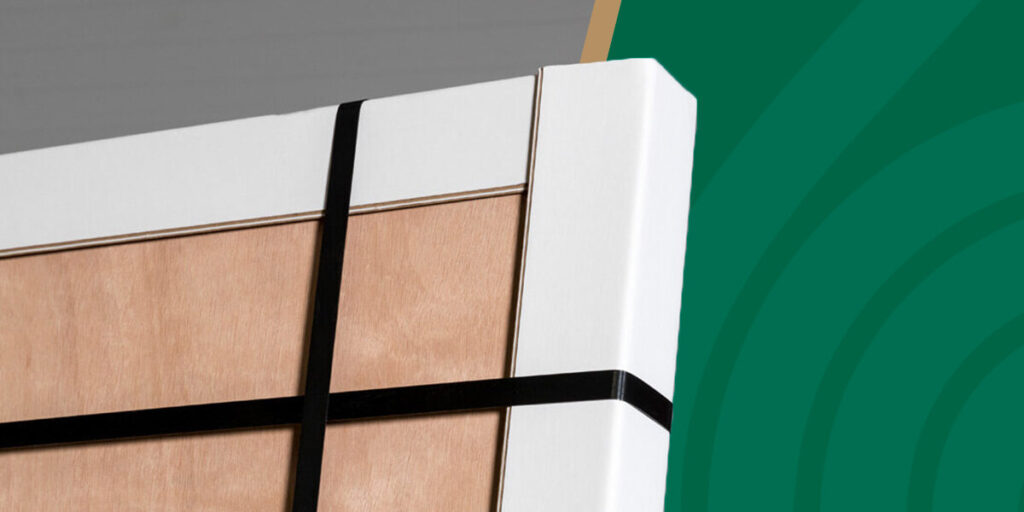
Paperboard protectors are an engineered approach to edge protection. The construction process bonds multiple layers of paperboard together and forms them into rigid angles. This manufacturing method creates exceptional structural strength and rigidity.
The primary benefit lies in load stability. Engineered paperboard protectors reduce the risk of boxes collapsing under weight during stacking. Their rigid construction supports palletized loads and maintains package integrity throughout the supply chain. At the same time, they are lightweight, helping to keep shipping costs down. Paperboard protectors are also more sustainable because they are fully recyclable.
Comparing the Common Edge Protection Alternatives
Comparing packaging material options across the factors that affect your bottom line reveals meaningful differences in performance, cost, sustainability and efficiency.
Damage Prevention and Load Stability
Structural support capability varies significantly among edge protection alternatives:
- Bubble Wrap and air pillows: Offer the least structural support, functioning mainly as cushioning rather than load-bearing protection.
- Foam corners and edges: Provide better edge coverage, but can compress and fail under sustained pressure.
- Corrugated inserts: Provide moderate structural integrity and work well for lighter products in single-layer shipping.
- Paperboard protectors: Lead in damage prevention and load stability with rigid construction that adds beam strength to pallet loads.
Total Cost-Effectiveness
Per-unit pricing tells only part of the cost story. Plastic and foam-based materials may appear economical at first glance, but total cost analysis must account for damage-related expenses.
Processing a return can cost 20%-65% of the item’s original value. When products arrive damaged, you face high hidden costs, such as:
- Replacement shipping fees and inventory loss.
- Customer service time handling complaints and processing returns.
- Potential loss of future sales and customer lifetime value (CLV).
- Negative reviews that impact your reputation.
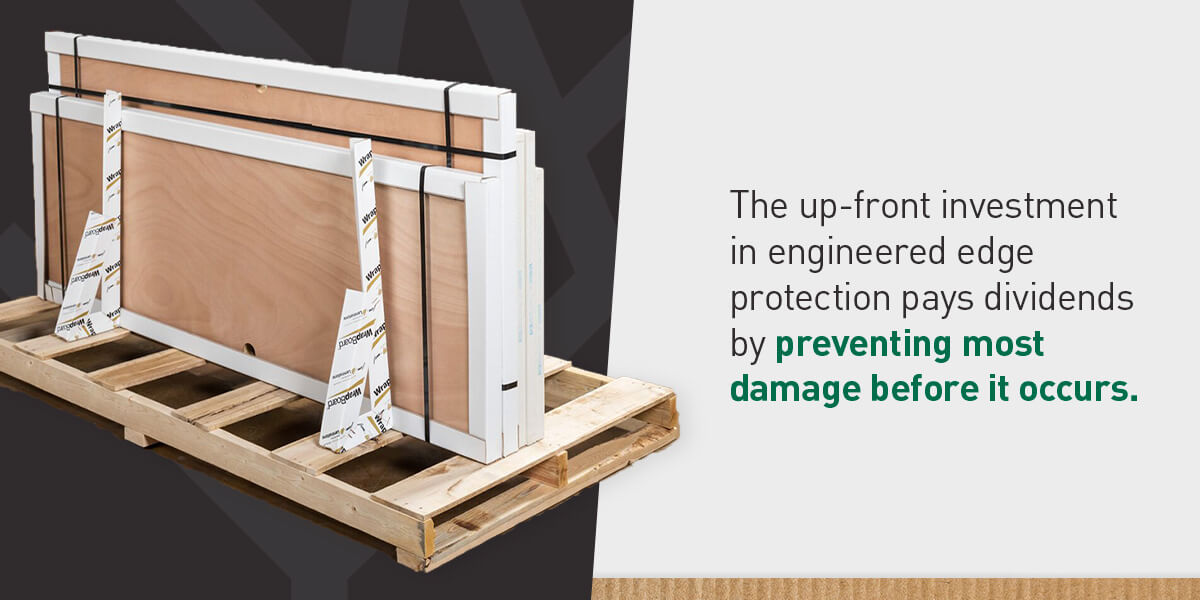
The up-front investment in engineered edge protection pays dividends by preventing most damage before it occurs. Companies that reduce costly returns through better packaging protection see improved profit margins and stronger customer relationships.
Sustainability and Recyclability
Environmental impact increasingly influences packaging decisions as companies work to meet sustainability goals and consumer expectations. Foam and Bubble Wrap are plastic-based materials with low recycling rates.
Corrugated inserts and paperboard protectors offer superior sustainability profiles. Paper recycling infrastructure exists widely across the U.S. In 2024, the paper recycling rate ranged from 60%-64%, while cardboard recycling ranged from 69%-74%, according to the American Forest & Paper Association. Paperboard edge protectors align with corporate sustainability commitments and reduce environmental impact without sacrificing protection performance.
Operational Efficiency
Warehouse workflow efficiency directly affects labor costs and shipping throughput. Bubble cushioning’s protective quality varies depending on the packer’s technique, leading to inconsistent protection across shipments. Corrugated inserts often require time-consuming folding and assembly steps that slow packing lines. Foam storage presents space management challenges due to its bulkiness.
Paperboard protectors stand out as simple drop-in solutions. Packers can quickly position them around product edges and corners in seconds. The slim profile allows efficient storage in warehouse settings. Consistent application means every package receives uniform protection, and faster packing speeds often translate to higher daily shipping volumes and lower per-unit labor costs.
Custom-engineered paperboard protectors amplify these efficiency gains. When protectors are designed specifically for your product dimensions and shipping configuration, they eliminate the trial-and-error fitting process. Packers work more efficiently and achieve precise positioning with each application. Custom solutions also reduce material waste, as each protector is tailored to your exact specifications.
Choosing the Right Edge Protection for Your Products
Consider these questions to make your final, informed decision:
Heavy items need structural support that prevents crushing during stacking. Light products may succeed with basic cushioning.
Delicate electronics or glass items require shock absorption and impact protection. Durable goods need mainly edge support to prevent box deformation.
Companies with environmental commitments benefit from recyclable paperboard solutions that align with corporate values and customer expectations.
Palletized freight requires load stability that basic cushioning cannot provide. Individual parcel shipments may have different protection requirements.
High-value items warrant premium protection to help prevent costly replacements and maintain customer satisfaction.
For most palletized goods and products, engineered paperboard provides superior protection. The combination of damage prevention, sustainability and operational efficiency makes paperboard protectors an effective choice for businesses seeking consistent performance.
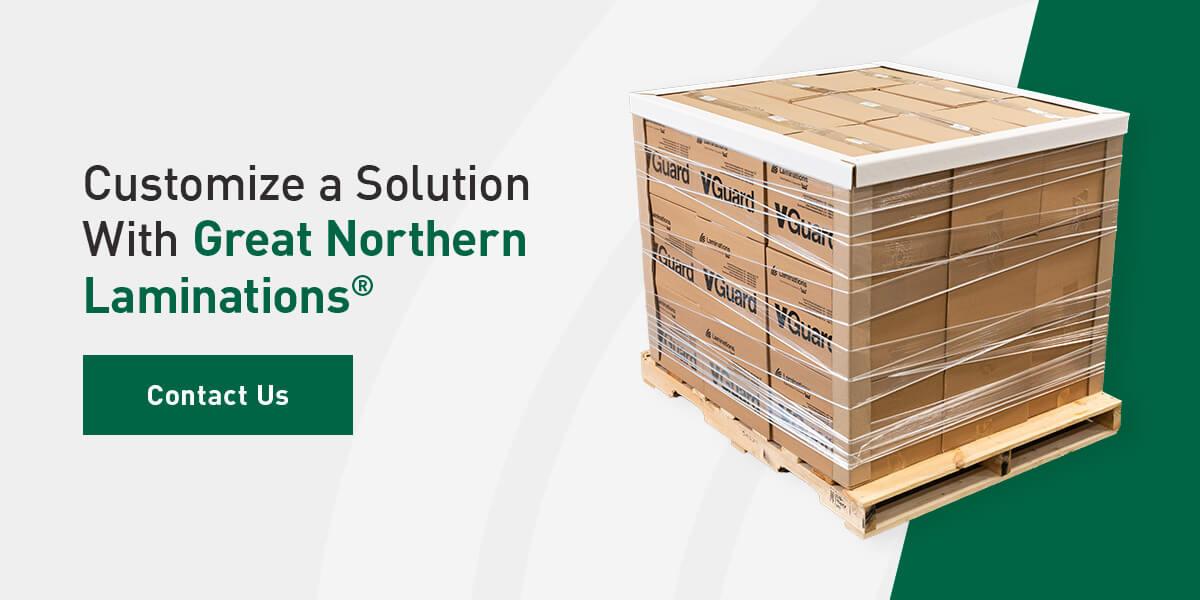
Customize a Solution With Great Northern Laminations®
Laminations develops engineered paperboard edge protection that reduces damage, accelerates packing operations and supports your sustainability commitments. Our team works with you to design custom solutions tailored to your specific product dimensions, weight requirements and shipping conditions.
With International Safe Transit Association (ISTA) testing capabilities and decades of packaging engineering experience, Laminations delivers protection systems you can trust. Ready to explore how paperboard protectors can strengthen your packaging strategy? Contact our team today for a custom consultation.