How many shipments arrive with crushed corners, shifted loads or damaged products because the protection wasn’t right for the job? Improper edge protector sizing is one of the most common culprits behind shipping damage, and it’s costing businesses more than they realize. When edge protectors don’t fit correctly, loads shift during transit, corners collapse under strapping pressure and dimensional weight charges pile up from oversized packaging.
The good news? Choosing the right edge protector size doesn’t have to be guesswork. This guide will walk you through a clear, step-by-step process to measure your load, evaluate your protection needs and select edge protectors that actually do their job.
Before You Measure: Understanding the Cost of a “Good Enough” Fit
Why does sizing matter? Because a “one-size-fits-all” approach to edge protection doesn’t work.
When edge protectors are too small, they fail to evenly distribute strapping pressure, leaving vulnerable corners exposed to crushing forces. Oversized protectors waste material and add unnecessary weight, driving up shipping costs. Over time, small sizing errors compound across thousands of shipments, turning a minor inefficiency into a significant drain on your bottom line.
Getting edge protector sizing right reduces material waste, minimizes customer complaints and strengthens your brand’s reputation for delivering products intact. When customers receive undamaged shipments consistently, that reliability builds trust and reduces returns.
The 3 Core Specifications of an Edge Protector
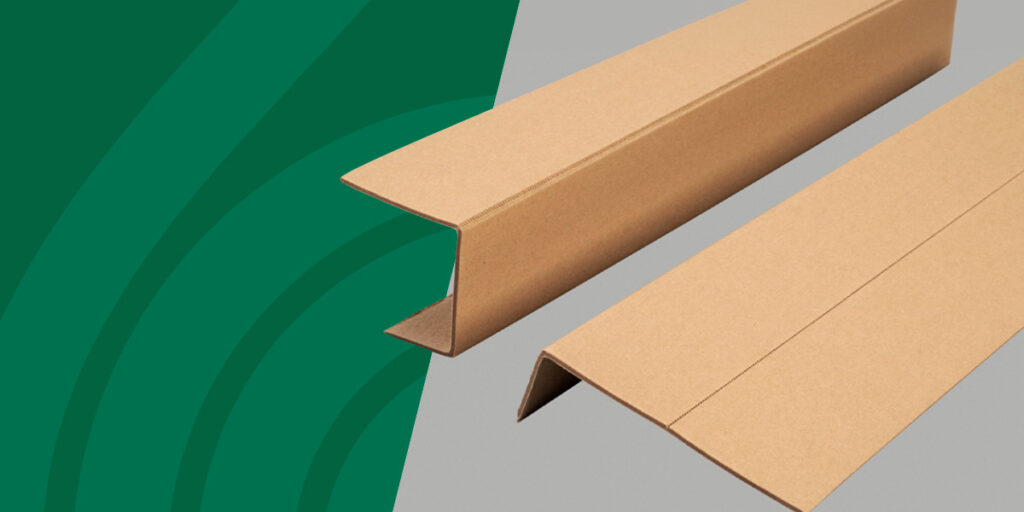
Before you can size edge protectors accurately, you need to understand the three key specifications that define every product: leg length, caliper and overall length. Think of them as the building blocks of a perfect fit. Each specification serves a distinct purpose, and choosing the right combination ensures your edge protectors deliver the protection your shipments need.
Overall length is the total length of the individual edge protector piece. The size of the load you’re protecting determines this dimension. For example, protecting a 48-inch-tall pallet typically requires edge protectors cut to that height.
Overall length doesn’t affect strength, but it matters for fit and efficiency. Undersized protectors leave portions of the load vulnerable, while oversized ones create waste and complicate handling during packaging operations.
A Step-by-Step Guide to Sizing Your Edge Protectors
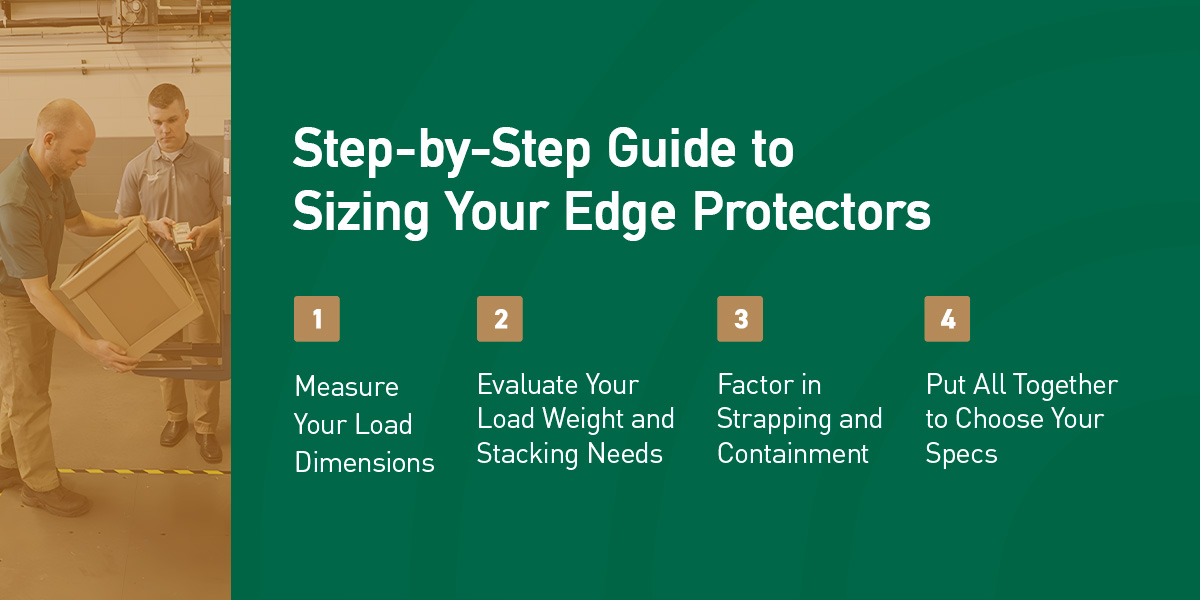
Now that you understand the three core specifications, it’s time to apply them to your own products. Follow these steps to size your edge protectors with confidence.
Start with the basics and measure the length, width and height of your standard pallet load or large product. Use a tape measure to capture accurate dimensions, and note whether your load configuration stays consistent or varies from shipment to shipment.
For palletized loads, measure from the base of the pallet to the top of the stacked product to determine the overall length you'll need for vertical edge protectors. Knowing how to measure edge protection starts with understanding the exact geometry of what you're protecting.
Weight matters. A 500-pound pallet requires significantly less caliper than a 2,000-pound load, and the difference becomes even more pronounced when you factor in stacking. If your pallets are stacked three-high or stored in racking systems, account for the total compressive force, not just a single unit's weight.
Consider your entire supply chain. Will these pallets be stacked in a warehouse for weeks? Will they endure multiple handling events during transit? Heavier loads and higher stacks demand a more robust caliper to maintain structural integrity.
Strapping is one of the primary forces acting on your edge protectors, and it concentrates enormous pressure on relatively small contact points. Without adequate protection, strapping can cut into corners, crush packaging and damage the product itself.
The width of your strapping plays a key role in leg length selection. Narrow straps (such as 1-inch banding) focus pressure on a smaller area, while wider straps (2 inches or more) distribute force more broadly. Your edge protectors need legs wide enough to extend beyond the strapping contact zone and disperse that force across a larger surface area.
Let's bring it together with concrete examples. Consider a 48-inch-tall pallet with a load weight of 1,500 pounds, to be stacked two high. Edge protectors with 2.5-inch x 2.5-inch legs, a 0.160-inch caliper and a 48-inch overall length would provide sufficient leg coverage for standard strapping, enough caliper to handle the compressive load, and the right length to protect the full pallet height.
For a lighter scenario — an 800-pound load with no stacking requirements — 2-inch x 2-inch legs paired with a 0.120-inch caliper would deliver adequate protection. At the other end, extremely heavy machinery components that require reinforced containment may require 3-inch x 3-inch legs with a 0.225-inch caliper to safely handle the load.
The key is matching your specifications to your conditions. Don't overengineer protection you don't need, but don't under-spec and risk damage, either.
When to Consider a Custom-Engineered Solution
This approach works well for standard loads with predictable dimensions, weights and shipping conditions. But irregular shapes, extreme weights, oversized products or unique shipping environments may require more than off-the-shelf solutions.
That’s where custom-engineered edge protection comes into play. If you’re dealing with complex packaging challenges, such as products with nonstandard geometries or shipments destined for harsh transit conditions, working with an expert can save you time and money. These tailored approaches can be designed and validated through rigorous testing. For example, ISTA 6 testing and certification verify that your edge protection performs under real-world conditions.
Beyond validation, custom approaches also enable innovative protection designs that standard products can’t deliver, whether that’s specialty folds, integrated features for automated packaging lines, or protection tailored to specific carrier requirements.
You should consider a custom-engineered solution if you are dealing with irregular product shapes, extreme weights, oversized products or unique shipping environments. Standard edge protectors may not provide adequate protection for these complex packaging challenges.
Start Shipping Smarter With Great Northern Laminations®
Selecting the right edge protector size comes down to a methodical approach — measure your load, evaluate weight and stacking requirements, factor in strapping forces, and match those variables to leg length, caliper, and overall length. When you get the sizing right, you reduce product damage, optimize shipping efficiency and protect your brand’s reputation with every delivery.
Whether you’re looking for standard edge protection solutions or need custom-engineered products for unique shipping challenges, Laminations can help. Our team members bring decades of expertise in protective packaging, and our recyclable solutions help you meet sustainability goals while keeping your products safe. Explore our edge protection products to find the right fit for your operation.