Today, products move through more touchpoints than ever. They are stored, stacked, palletized, transported and handled across multiple facilities. Supporting their journey requires proper custom packaging design and engineering, which follows a structured seven-step process.
It starts with defining distribution requirements and selecting materials and extends through to design, International Safe Transit Association (ISTA) testing and production. Understanding each step makes it easier to identify the right packaging partners and communicate requirements clearly.
Why Businesses Need Custom Packaging Design and Development
For businesses shipping products at scale, packaging plays a strategic role. It impacts how products are presented and perceived, how they move and how they benefit the bottom line.
- Branding: Custom design and development allows you to incorporate your business’s logos, colors, fonts and slogans into your packaging. This, in turn, makes your products easier to recognize and remember, helping build trust with partners and customers.
- Operational credibility: Packaging is physical proof of your standards. When your products arrive protected, it sends a strong message about your reliability, consistency and the level of care behind your operations.
- Shipping efficiency: Structural package engineering determines how well your products stack, ship and arrive. When the design is done right, you can make the most of your space and your shipments move more smoothly from facility to facility.
- Cost control: Product-specific packaging fits your products the way they should from the start and accounts for specific shipping conditions in advance. As such, you can minimize expenses associated with wasted materials and damaged loads.
Given the importance of packaging, it is worth understanding how packaging design and engineering work. A solid grasp of the stages helps ensure that everything is executed properly and that your packaging performs reliably across the supply chain.
7 Steps for Designing and Engineering Custom Packaging
Custom packaging design and development follow a specific sequence, with each step supporting the packaging’s intended level of protection.
1. Define Requirements and Risks
The first part of designing and engineering packaging is creating a clear blueprint informed by requirements and risks.
- Requirements: Packaging requirements vary depending on the product, its industry and its movement through the supply chain. Applicable standards and regulations may also influence design decisions and expectations. For example, the Food and Drug Administration (FDA) has strict requirements for food and drug packaging to ensure safety and prevent contamination.
- Risks: Engineers evaluate product weight, dimensions, weak points, stacking patterns, handling methods and environmental exposure to identify potential risks during shipping, storage and distribution.
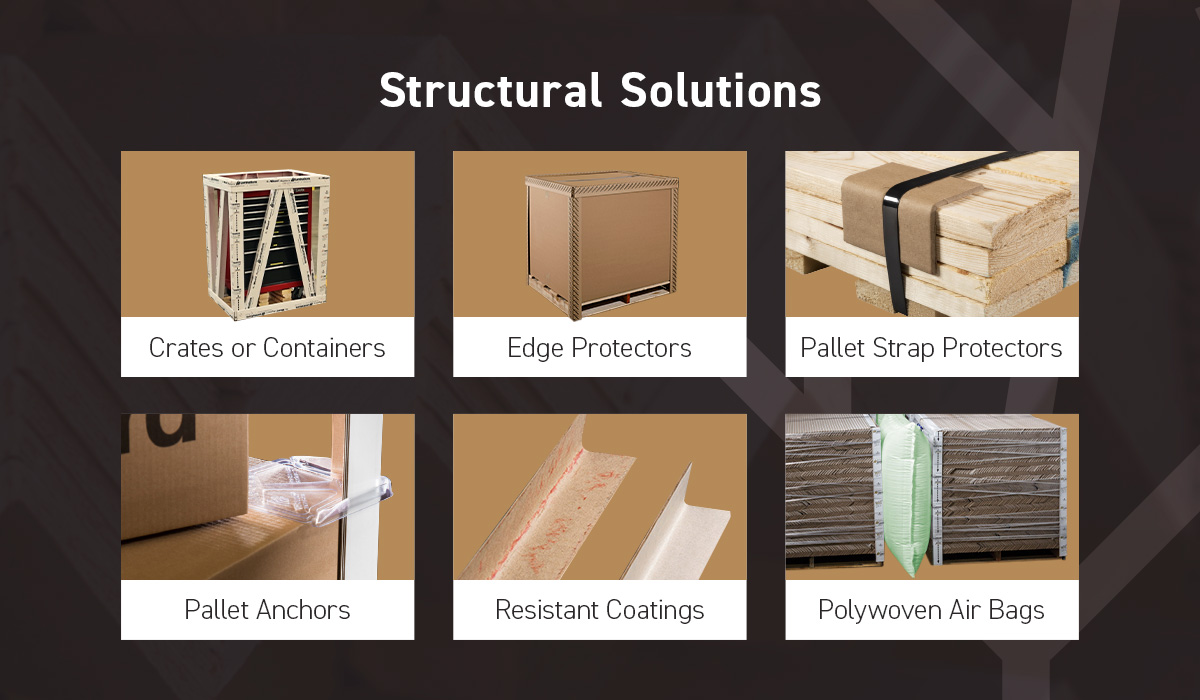
With the requirements and risks defined, teams can brainstorm the appropriate protective packaging approach. This can include structural solutions like crates or containers, along with protective components such as edge protectors, pallet strap protectors, pallet anchors, resistant coatings and polywoven air bags.
2. Select Suitable Materials
There are many types of protective packaging materials, and they can make or break your products, especially if you have irregularly shaped items. Common options include:
- Cartons
- Crates
- Foam inserts, sheets and wraps
- Paperboard
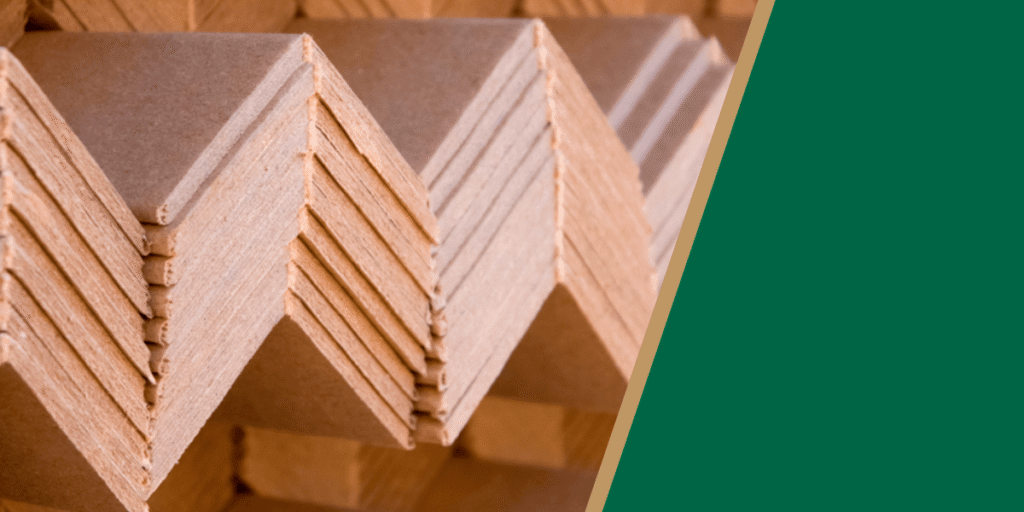
Engineers select materials based on your products’ specifications and the previously identified requirements and risks. For example, crates may be chosen for heavier loads that require rigid structural support, while foam inserts can help cushion precision components. Paperboard is often used for protective structural elements, such as edge protection and corner protection, when products are palletized or stacked.
Sustainability also plays a role in this selection stage, as global consumers’ views on sustainable packaging increasingly influence material decisions. Many businesses prioritize responsible resource use and therefore prefer materials that are recyclable or recycled, like paperboard.
3. Engineer the Structural Design
The next step is custom packaging engineering, in which engineers develop the structure that supports and protects the product. They use computer-aided design (CAD) to:
- Model weight distribution.
- Simulate stacking pressure.
- Map load paths and compression areas.
- Identify reinforcement needs at edges and corners.
- Refine structural dimensions for performance and protection.
While designing, engineers think about how the packaging will be manufactured and assembled, including how it will run through cutting and forming equipment and how efficiently the materials will be used per unit. By doing so, engineers can:
- Reduce costly design revisions later.
- Improve production efficiency.
- Support a smoother scale-up from sample to production.
- Enhance consistency across shipments and production runs.
4. Prototype and Optimize
Once the structural design is complete, a physical prototype is produced using sample cutting tables or a computer numerical control (CNC) router. The prototype is made from the selected materials, so engineers can evaluate how the protective packaging performs under realistic conditions.
Any issues that appear can then be corrected, preventing delays, damaged goods and costly design revisions later. For example, engineers may find that corner reinforcement needs to be repositioned and will adjust accordingly. Prototypes are also shared with you and your team to place products inside the packaging and confirm the design fits your packing process before production begins.
5. Validate With ISTA Testing
The packaging must then be formally tested. Many engineers use ISTA standards that simulate the conditions packages encounter during transportation. ISTA protocols are organized into several testing series, each designed for different levels of evaluation. ISTA Series 6, the most advanced level, closely mirrors real supply chain conditions. Packaged products are exposed to controlled drops, vibration, compression and environmental stresses.
The goal is to confirm that the engineered packaging solutions perform reliably across shipping, handling and storage scenarios before starting full-scale production and distribution. If weaknesses are identified during testing, engineers revise the structural packaging design or add additional protective components. For example, testing can reveal that packaging exposed to high humidity loses structural strength. In these cases, moisture-resistant elements such as corner protection coated with HydroShield can help prevent damage.
6. Scale Production
Finally, the process moves into production, shifting from engineers to production teams. They confirm the design runs efficiently on cutting and forming equipment while maintaining structural integrity. This ensures protective packaging performs consistently across every unit, whether you are producing hundreds or hundreds of thousands. When this wraps up, you can pack and ship products at scale with greater efficiency and predictable margins.
Plan Your Custom Packaging Solution With Great Northern Laminations®
The process of designing and engineering custom packaging runs smoothly when you have the right partner supporting each stage. At Laminations, we develop protective packaging tailored to specific products, shipping conditions and sustainability goals.
Our solutions include edge protection, corner protection and other structural packaging designed to stabilize pallet loads and protect products throughout transit. Businesses rely on our team for packaging that simplifies processes and controls costs across the supply chain.
If you are planning a custom packaging project, our team members are ready to support you. Fill out our contact form to schedule a consultation.